
Meet William Tyndale: Bringing the Reformation Home: Stories, Resources, and Activities to Share with Your Children
My interest in the Reformation—and especially in how we can share this important part of church history with our children—grew after I had the opportunity to take a Reformation trip with my church two years ago.
My trip helped me see the Reformation as a much bigger story than I had understood it to be. The Reformation did not happen only in Germany with Martin Luther or in Switzerland with John Calvin. It unfolded over many decades and across much of Europe. God used pastors, scholars, teachers, printers, political leaders, and ordinary Christians in different countries to bring His Church back to the truth of His Word. Some of these Reformers knew one another. Some influenced one another from a distance. Some never met at all. But woven throughout their stories is a common conviction: God’s people need God’s Word.
So, as I thought about which Reformer we might introduce to our children this year, one man stood out: William Tyndale. And 2026 is the perfect year to meet him.
Did you know that five hundred years ago, possessing an English New Testament could get you into serious trouble? That may be difficult for our children to imagine. Walk through your house and count how many Bibles you can find. We can read the Bible on our phones, listen to it in the car, and choose from many different translations written in the language we can understand. But in William Tyndale’s England, ordinary English-speaking people did not have that kind of access to God’s Word.
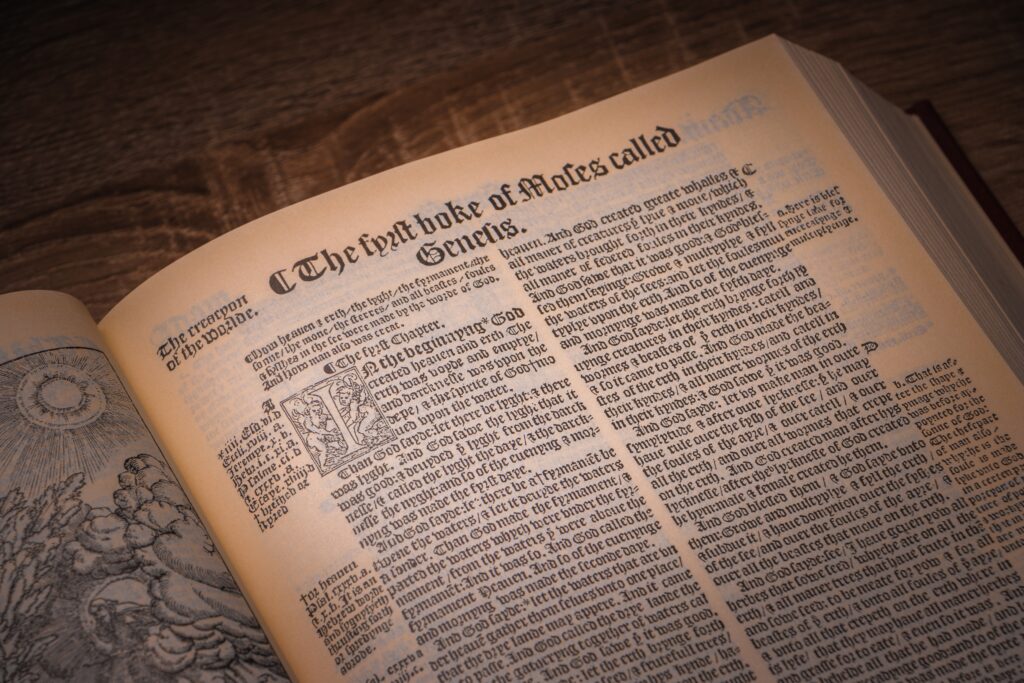
This year marks the 500th anniversary of the publication of Tyndale’s English New Testament in 1526. His story gives us a wonderful opportunity to help our children recognize one of the great gifts God has given His Church: His Word in a language we can understand.
William Tyndale was born in England around 1494 and became a gifted scholar. He studied at Oxford University, was ordained as a priest, and eventually became convinced that average people desperately needed to be able to read and understand Scripture for themselves. At the time, the Bible officially used by the Church was in Latin. For most common English men and women, God’s Word was not something they could simply pick up and read. Tyndale wanted that to change.
He is famously reported to have told a clergyman: “If God spare my life, ere many years, I will cause a boy that driveth the plough to know more of the Scripture than thou dost.”
Think about that statement with your children. Tyndale was not simply interested in producing another Bible for scholars. He wanted the farmer in his field, the mother in her home, the tradesman at his work—and eventually even children—to be able to hear and read God’s Word in the language they spoke every day.
Tyndale left England because he could not receive permission to translate and print the Bible there. He traveled to continental Europe and translated the New Testament directly from Greek into English.
This was the same era in which Martin Luther was translating the Bible into German. We do not know for certain whether Tyndale and Luther ever met, although Tyndale was certainly familiar with Luther’s work and was influenced by the wider Reformation taking place around him.
In 1526, complete copies of Tyndale’s English New Testament were printed in Worms, Germany. Then came the dangerous part: getting them into England. Copies of the New Testament were hidden among merchandise and secretly carried across the English Channel. Church authorities confiscated and burned many of them.
Tyndale’s work eventually made him a wanted man. For years he remained outside England, continuing his work while moving carefully from place to place. Eventually, while living in Antwerp, he was betrayed by an Englishman named Henry Phillips. Tyndale was arrested in 1535 and imprisoned at Vilvoorde Castle near Brussels. After more than a year in prison, he was executed in 1536.
His final prayer is traditionally remembered as: “Lord, open the King of England’s eyes.” Tyndale did not live to see the answer to that prayer. But remarkably, within just a few years, English Bibles were authorized and placed in churches throughout England. God used Tyndale’s scholarship, courage, perseverance, and deep love for Scripture to help put His Word into the hands of ordinary people.
And five centuries later, our children are among those ordinary people who can open a Bible and read God’s Word for themselves. That is something worth celebrating!
During Reformation month this October, take a little time to introduce William Tyndale to your children. You do not need to turn it into a complicated history lesson. Tell them his story, open your Bible together, and help them understand what a remarkable gift they are holding in their hands.
Activities and Resources
- Go on a Bible Hunt
Hide a few Bibles around the house and let your children search for them. Afterward, gather and talk about how different life would be if Bibles were difficult to find—or dangerous to own.
- Smuggle a Bible
Tyndale’s New Testaments had to be secretly carried into England. Wrap a small Bible and hide it inside a bag, box, or basket. Let your children try to carry it from one place to another without being “caught.”
- Try Being a Translator
Write a simple sentence in a code or unfamiliar language and let your children try to figure out what it says. Then give them the translation. Ask: “What good are the words if you can’t understand them?” Explain that Tyndale wanted ordinary people to hear and read God’s Word in their own language. Then choose a short passage of Scripture and read it aloud together.
To Learn More
William Tyndale and the English Bible by Mary Palmer: A short, illustrated picture book tailored for beginning readers. It is written by a former teacher specifically to introduce Christian history and missionaries to young minds. For ages 5-7.
The Bible Smuggler by Louise Vernon: An engaging historical fiction narrative told through the eyes of Colin, a young English boy who helps Tyndale smuggle Bibles. It works wonderfully as a family read-aloud for kids as young as 6 or 7.
The Sword of the Spirit: The Story of William Tyndale by Joyce McPherson: A comprehensive, meticulously researched biography for children that tracks Tyndale’s academic journey and his dangerous translation process. For ages 10 and older.
The Queen’s Smuggler by Dave and Neta Jackson: A suspenseful volume from the popular Trailblazers Series that frames Tyndale’s life as a fast-paced historical adventure, tracking his time as a fugitive across Europe. For ages 9-12.
William Tyndale: The Smuggler’s Flame by Lori Rich: Part of the Trail Blazers Christian biography series, this is an accessible way for children to encounter Tyndale’s courage, commitment to Scripture, and the dangers surrounding his translation work. For ages 8-14. This also comes as an audio book!
Torchlighters: The William Tyndale Story: An animated short film (about 30 minutes long) created for ages 8 to 12 that follows Tyndale’s adventures as a fugitive smuggling the English New Testament.
Sherry Kendrick serves as the Family Ministry Director of Covenant Church of Naples, Florida. She directs both the children and student ministry staff with the goal of discipling children from birth through high school with trained passionate teachers. In addition, she leads the family ministry staff to partner with parents as they disciple their children. Sherry has been on staff at Covenant for 12 years. She loves children’s curriculums and tends to collect them. She is the widow of a PCA pastor, Mike, and has three grown children and three grandchildren.